
The complete guide
A closer look at the Equipment For Wall Climbing

The Complete Buying Guide to Kids' Climbing Holds
Everything Parents Need to Know Before Building a Home Climbing Wall
Whether your child scales the furniture the moment your back is turned, or you're simply looking for a meaningful way to get them active and off screens, investing in a home climbing wall kit could be one of the smartest decisions you make for their childhood. Rock climbing develops physical strength, mental resilience, and problem-solving skills in ways that very few other activities can match , and with the right climbing hold sets and a little DIY enthusiasm, you can bring that experience directly into your home or garden.
This guide walks you through everything you need to know: from understanding what equipment for wall climbing actually involves, to choosing the right setup for your space, your budget, and your child's age and ability.
Why a Home Climbing Wall Is Worth the Investment
There's a reason climbing gyms for kids have exploded in popularity over the last decade. Rock climbing is a full-body workout disguised as play. It builds grip strength, core stability, coordination, and balance , all while demanding focus, spatial awareness, and creative thinking about how to move the body through space.
For young children especially, the developmental benefits are significant. Kids as young as two can begin exploring basic climbing holds, building confidence in their movement and developing proprioception , the body's sense of where it is in space , in a way that's hard to replicate through other play. As they grow, the challenge scales with them.
The beauty of a home rock climbing wall kit is that access is instant and constant. There's no driving to a gym, no membership fees, and no waiting for a turn. Your child can spend ten minutes on the wall before school or an hour on a rainy Saturday afternoon. That kind of casual, frequent access to physical challenge is genuinely rare , and genuinely valuable.
Understanding the Different Types of Climbing Wall Setups
Before you start shopping for a climbing wall kit, it helps to understand the different formats available and which might suit your household best.
Indoor Climbing Wall Kits
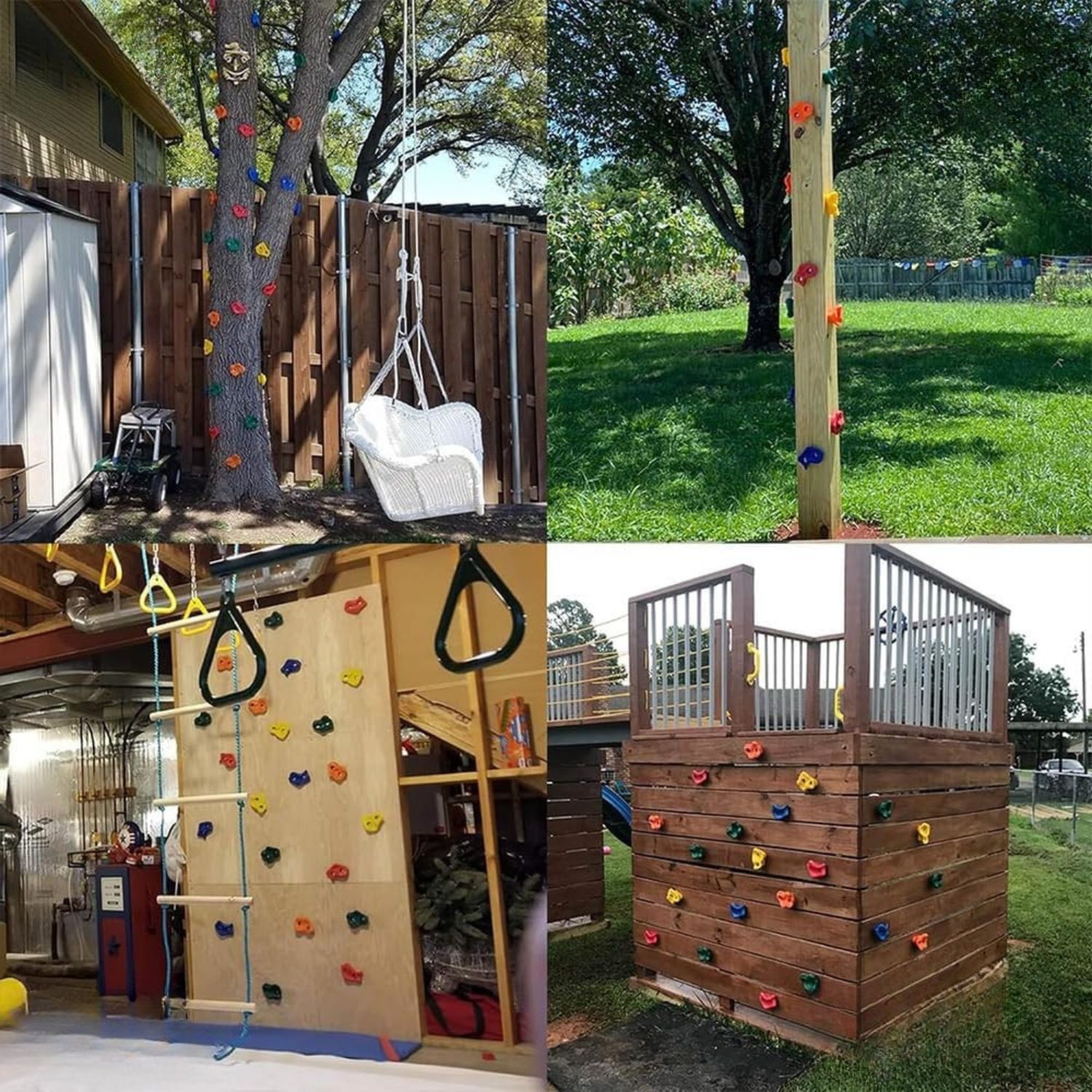
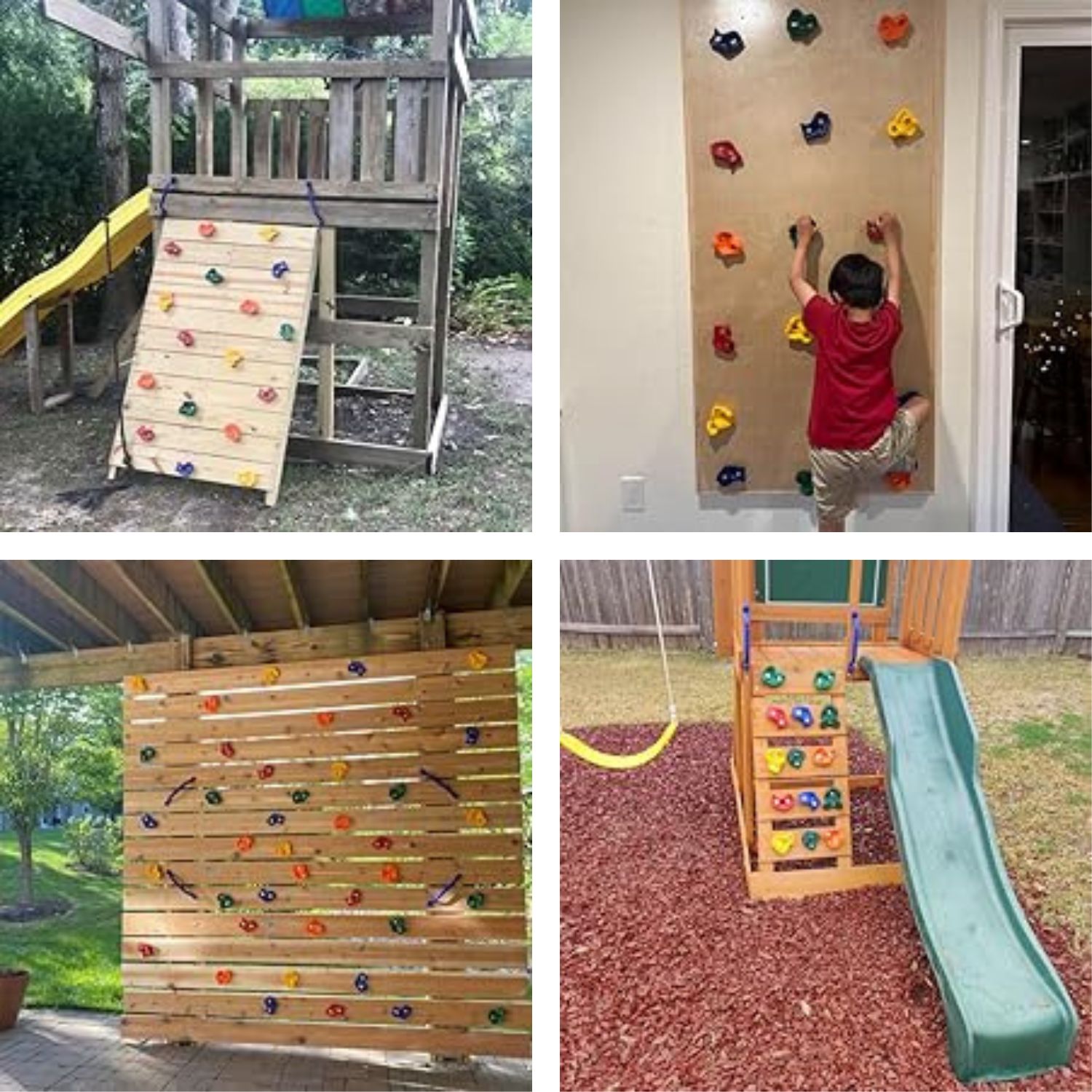
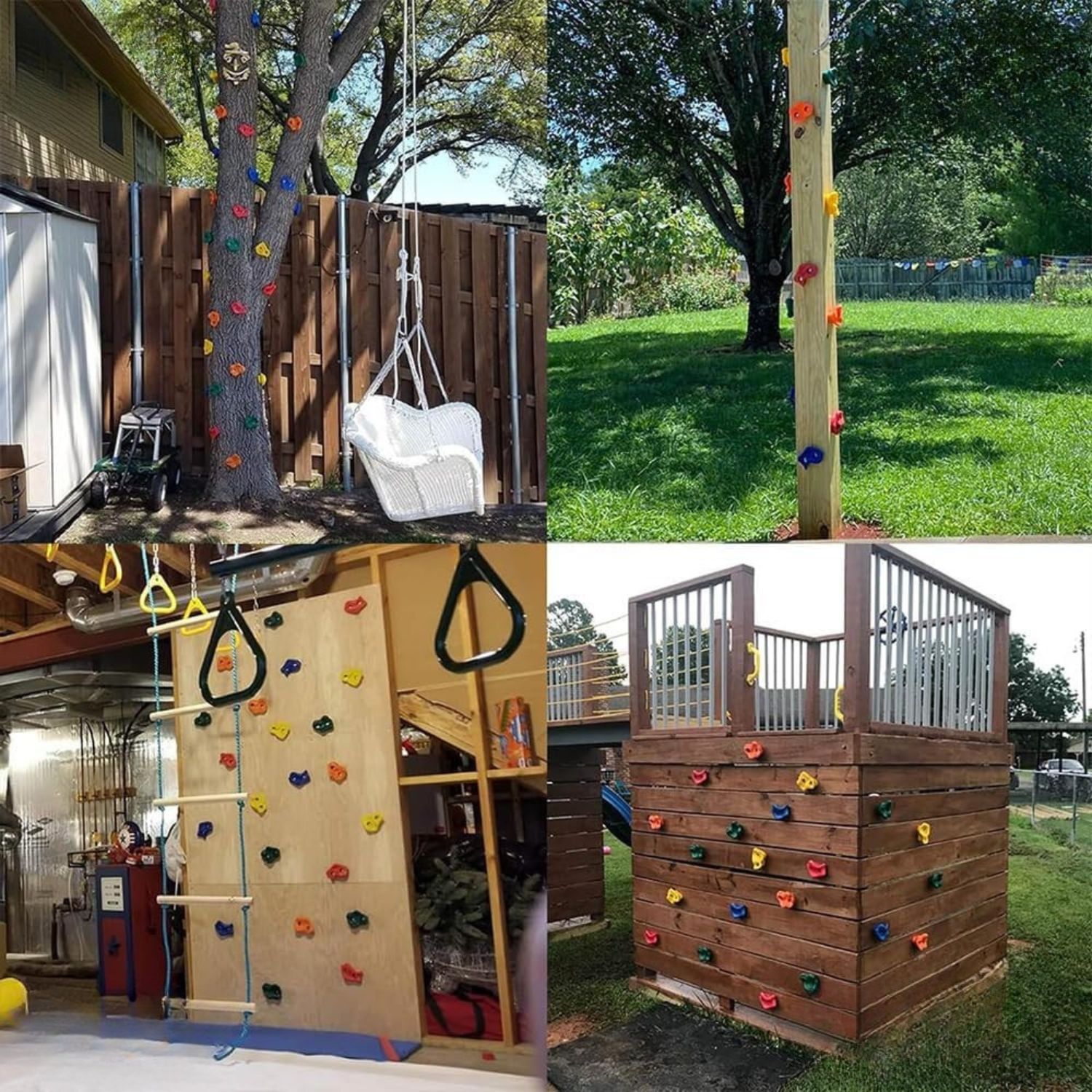
An indoor climbing wall kit is ideal for families who want year-round access regardless of weather. These setups are typically mounted to a dedicated plywood panel fixed to a wall or built as a freestanding structure in a playroom, garage, or basement. The advantage of going indoors is consistency , temperature, surface condition, and availability never change.
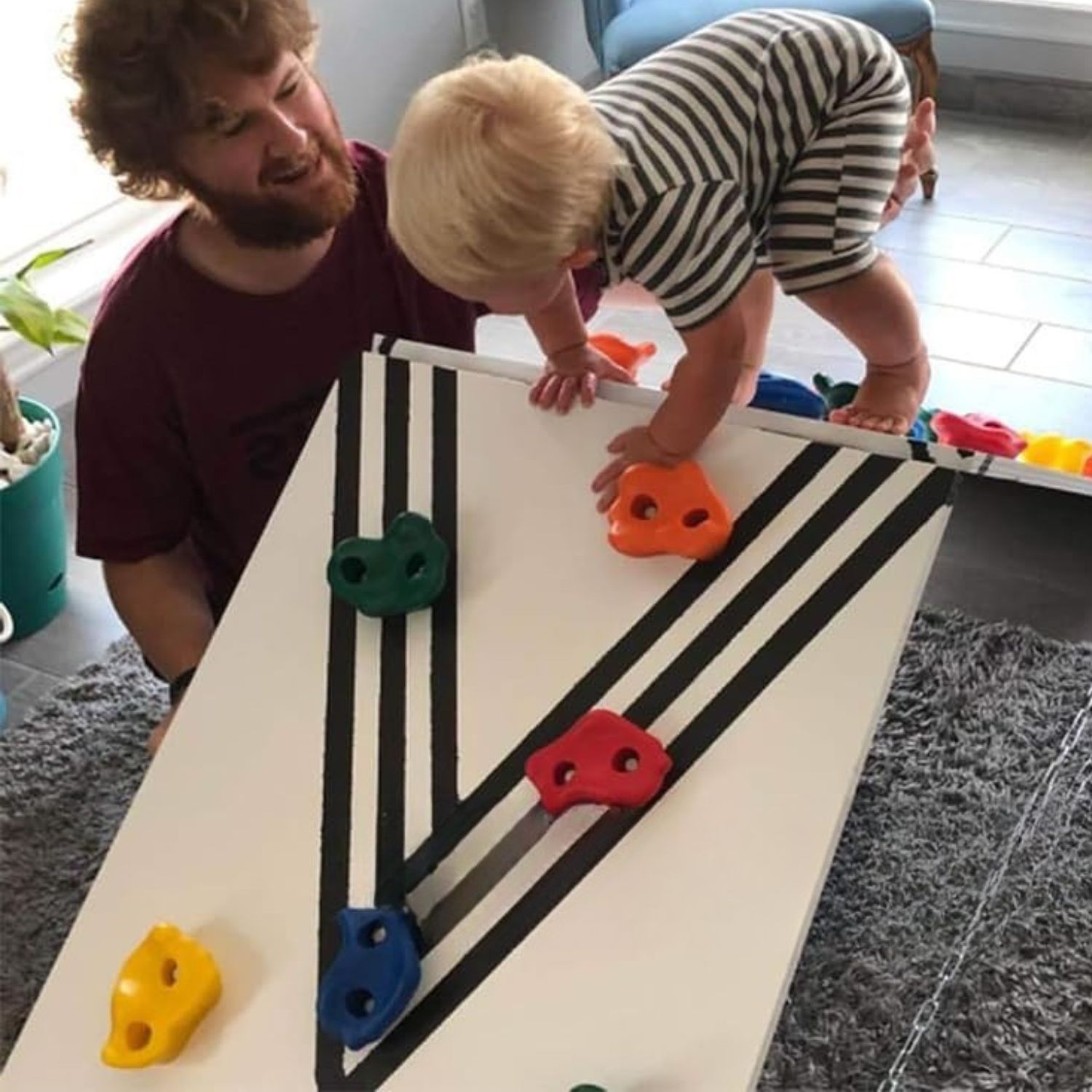
When building an indoor wall, the most common approach is to mount a sheet of ½-inch plywood to a sturdy wall and then attach your climbing hold sets directly to the board. Many parents incorporate this into a wider play area alongside balance beams, Pikler triangles, arches, and foam mats for landing.
Outdoor Rock Climbing Wall Kits
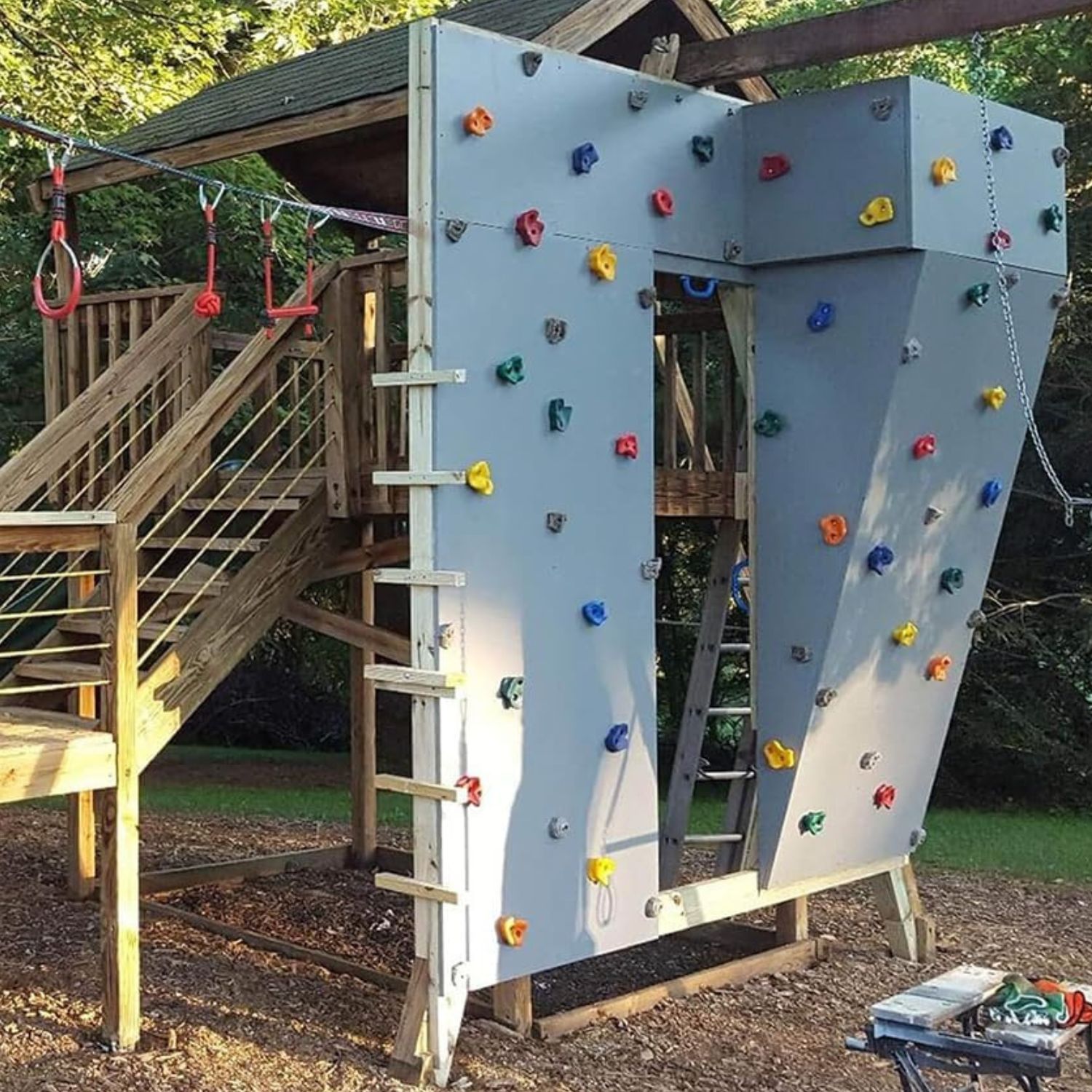
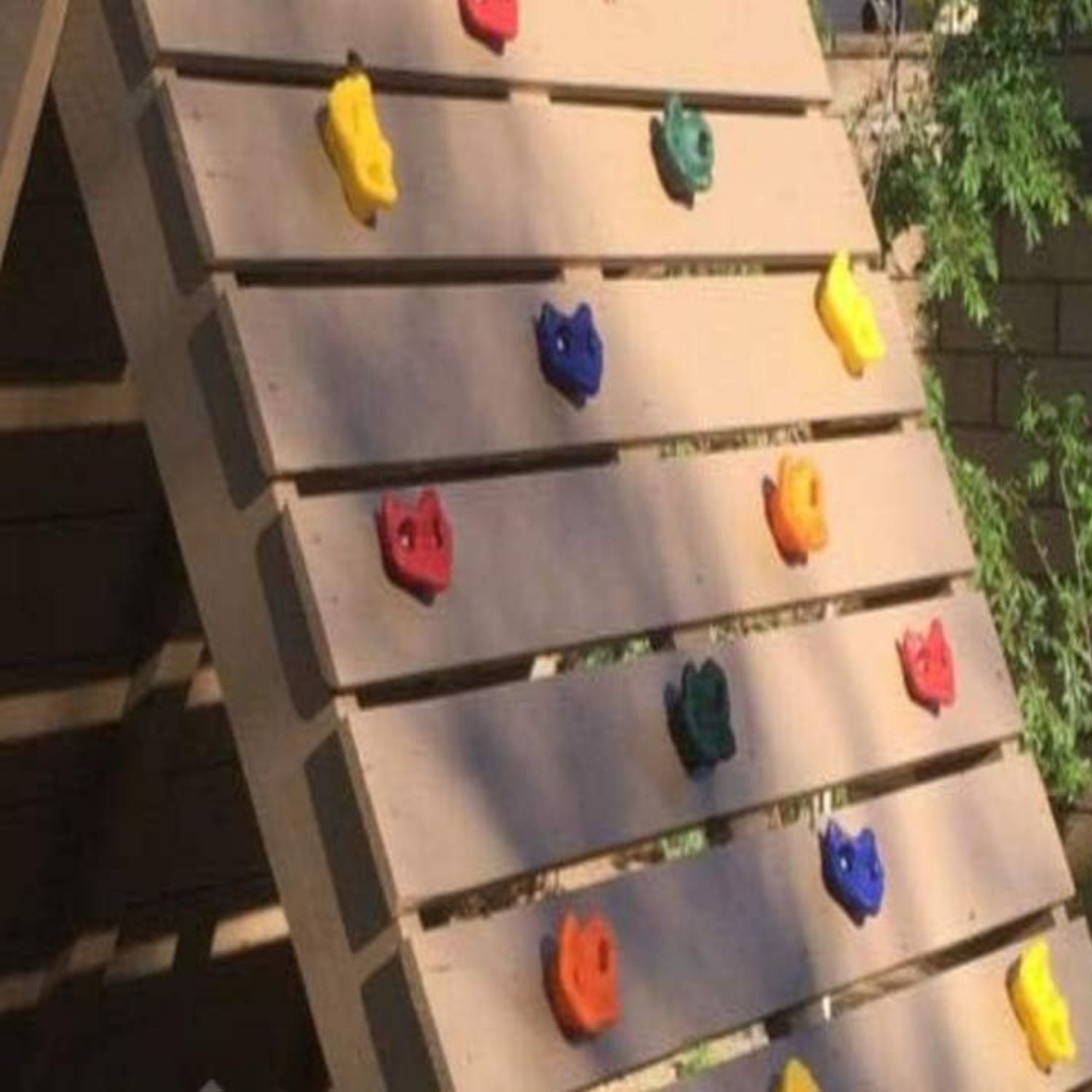
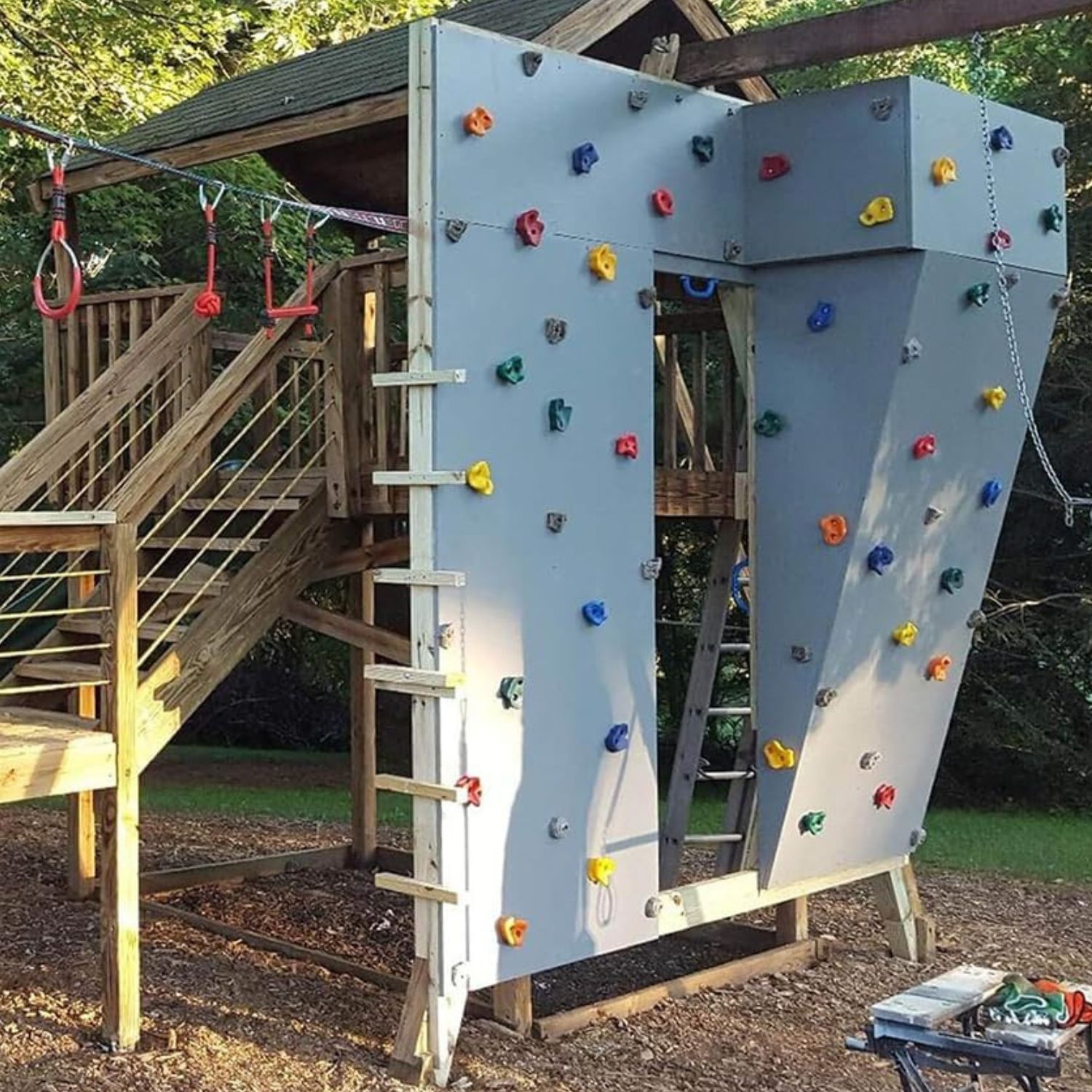
An outdoor rock climbing wall kit takes the adventure outside and tends to be the more dramatic visual statement. Outdoor walls are typically built as part of a larger backyard playset or as a standalone A-frame structure. They require materials rated for outdoor exposure , treated timber, weatherproof plywood, and rust-resistant hardware , but the payoff is a garden feature that children will gravitate to instinctively every time they head outside.
Wall climbing kits designed for outdoor use should include hardware that won't corrode, and the climbing holds themselves should be UV-stable so colours don't fade in direct sunlight. Always check the product specifications before installing holds in an outdoor environment.
Garage and Utility Space Setups
Don't overlook the garage. A blank garage wall or the sloped underside of a staircase can be transformed into a surprisingly compelling rock climbing wall kit setup with minimal structural work. Garages offer the best of both worlds , protected from rain but ventilated enough to feel like outdoor play. Many dedicated climbing families start here before eventually expanding to a full backyard structure.
What to Look for in Climbing Hold Sets
Not all climbing hold sets are created equal. Here's what separates a genuinely good set from one that ends up unused in a storage box.
Shape and Grip Texture
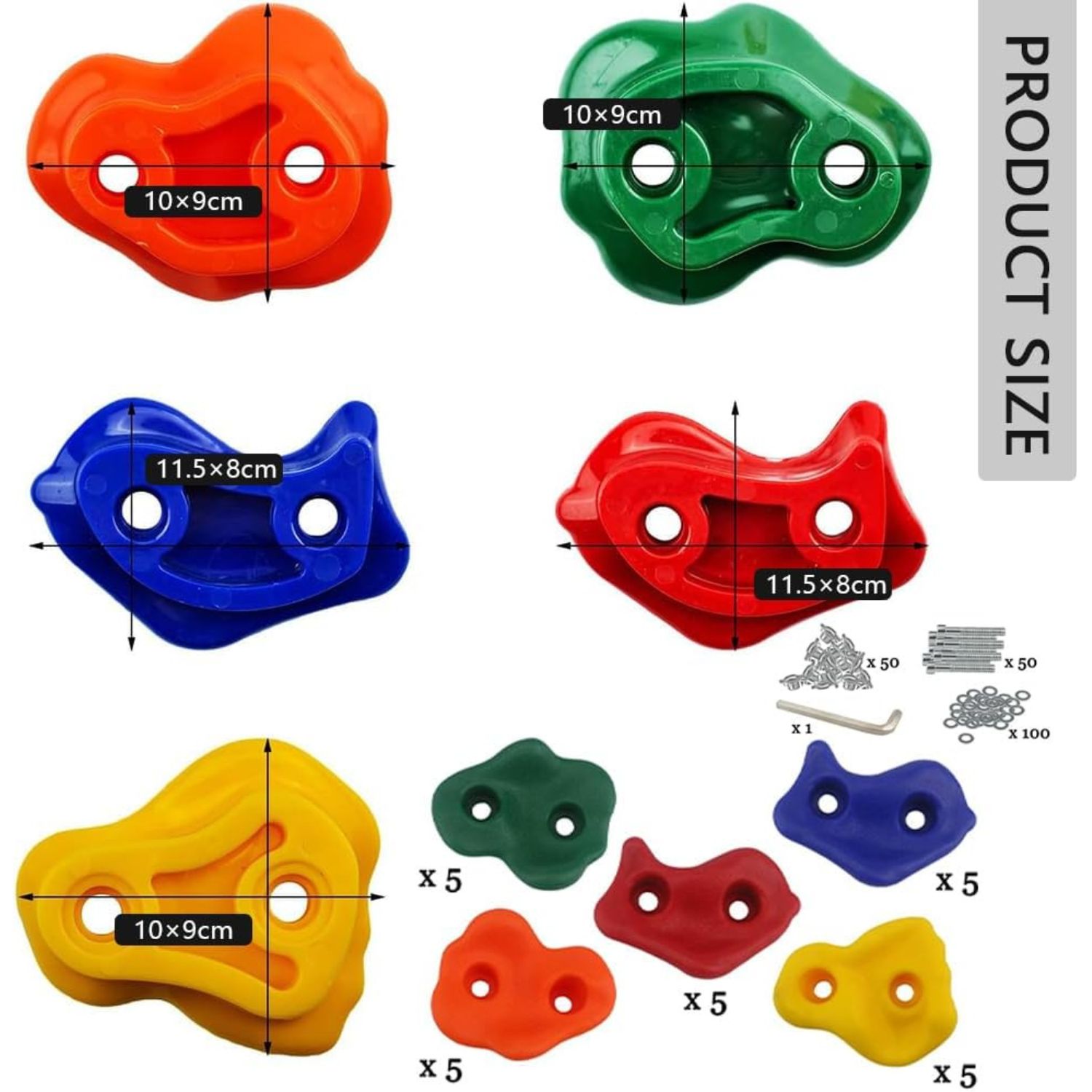
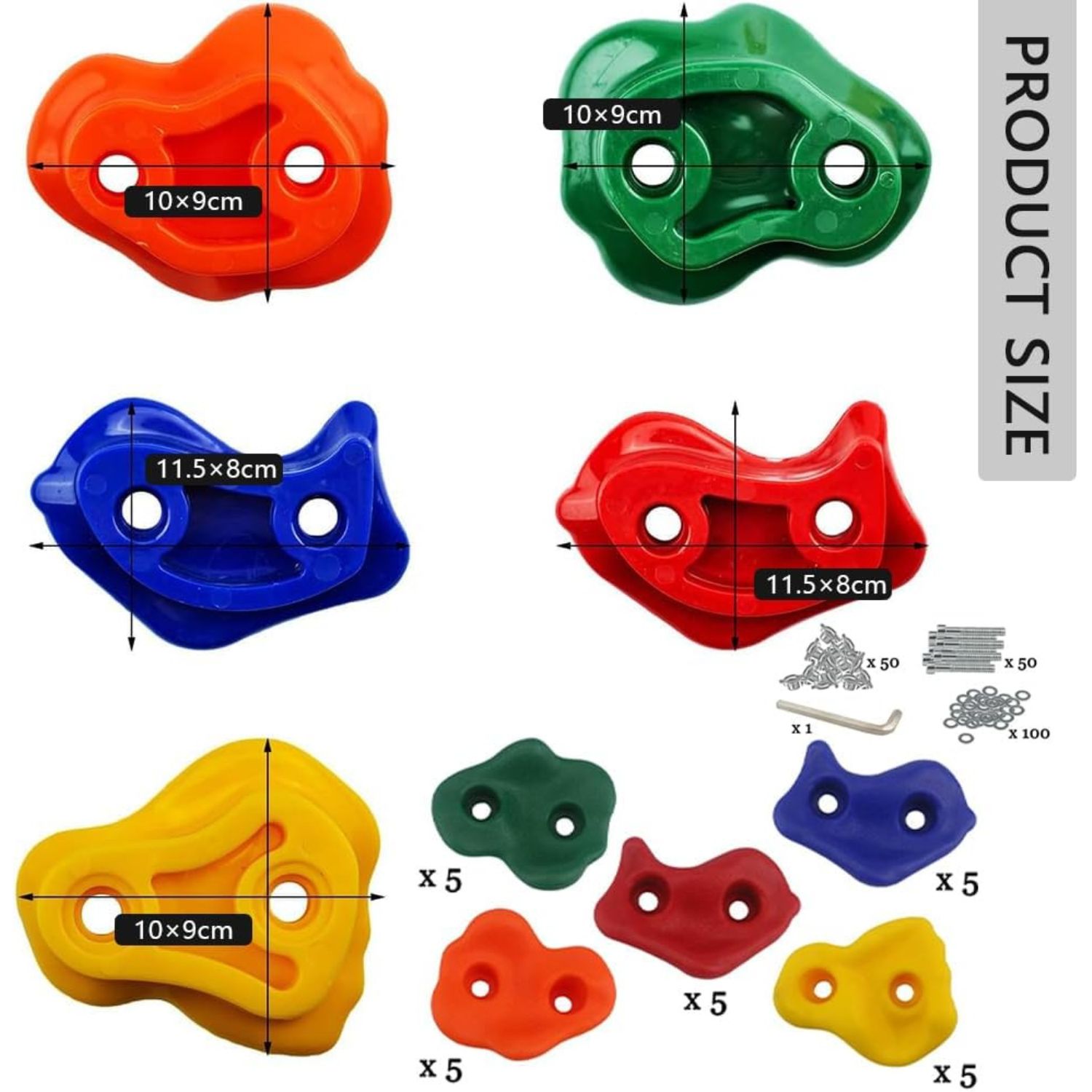
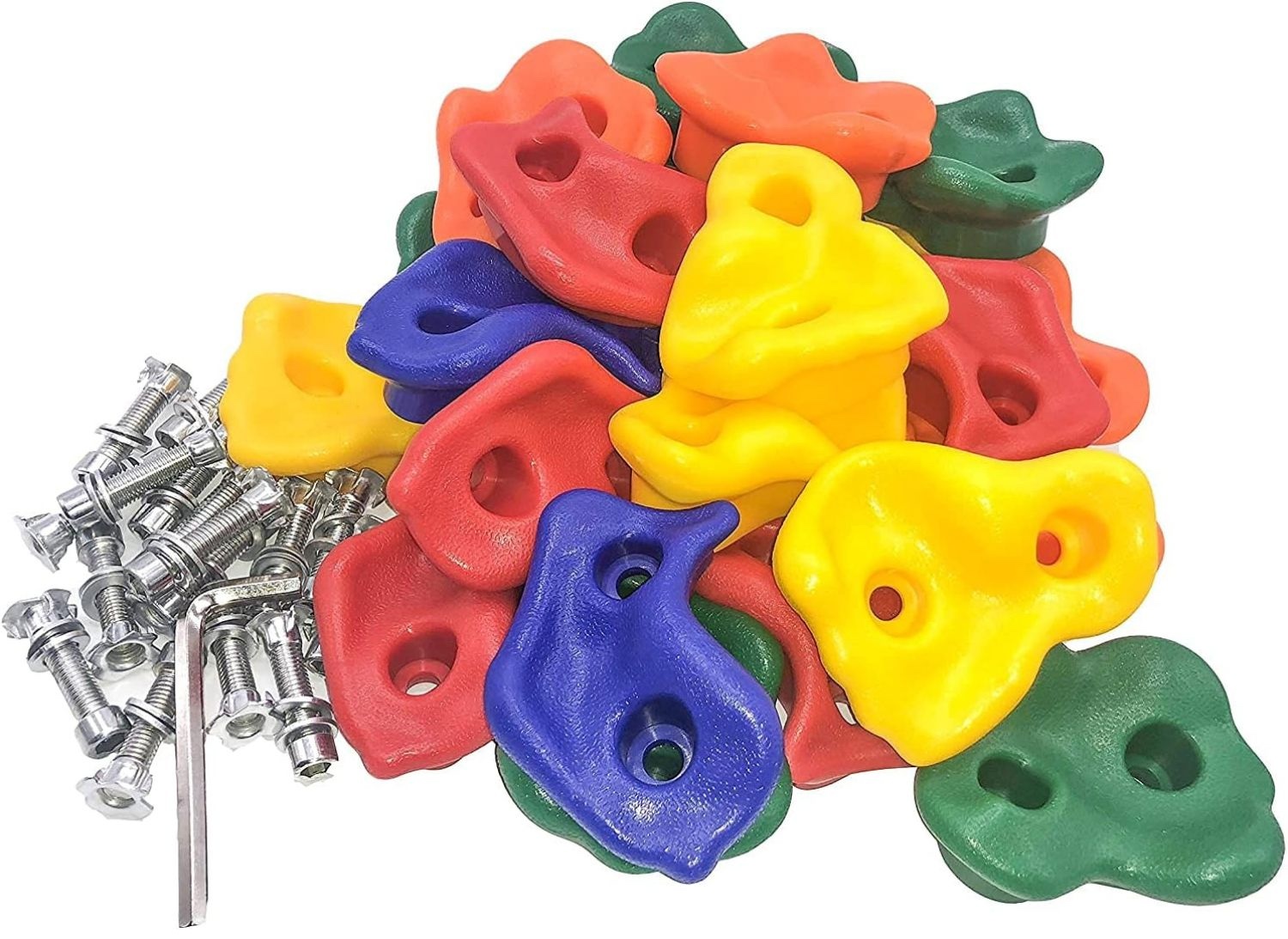
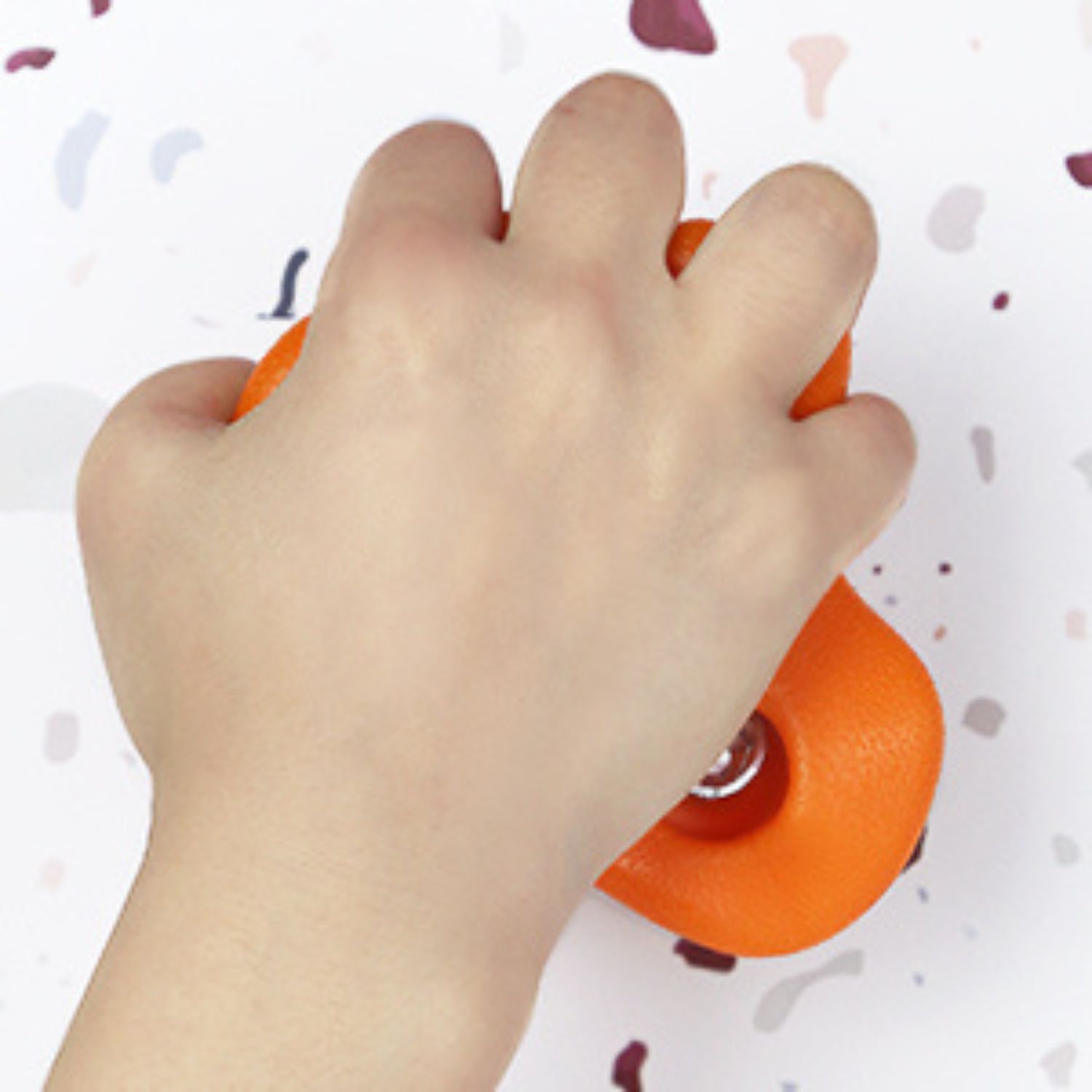
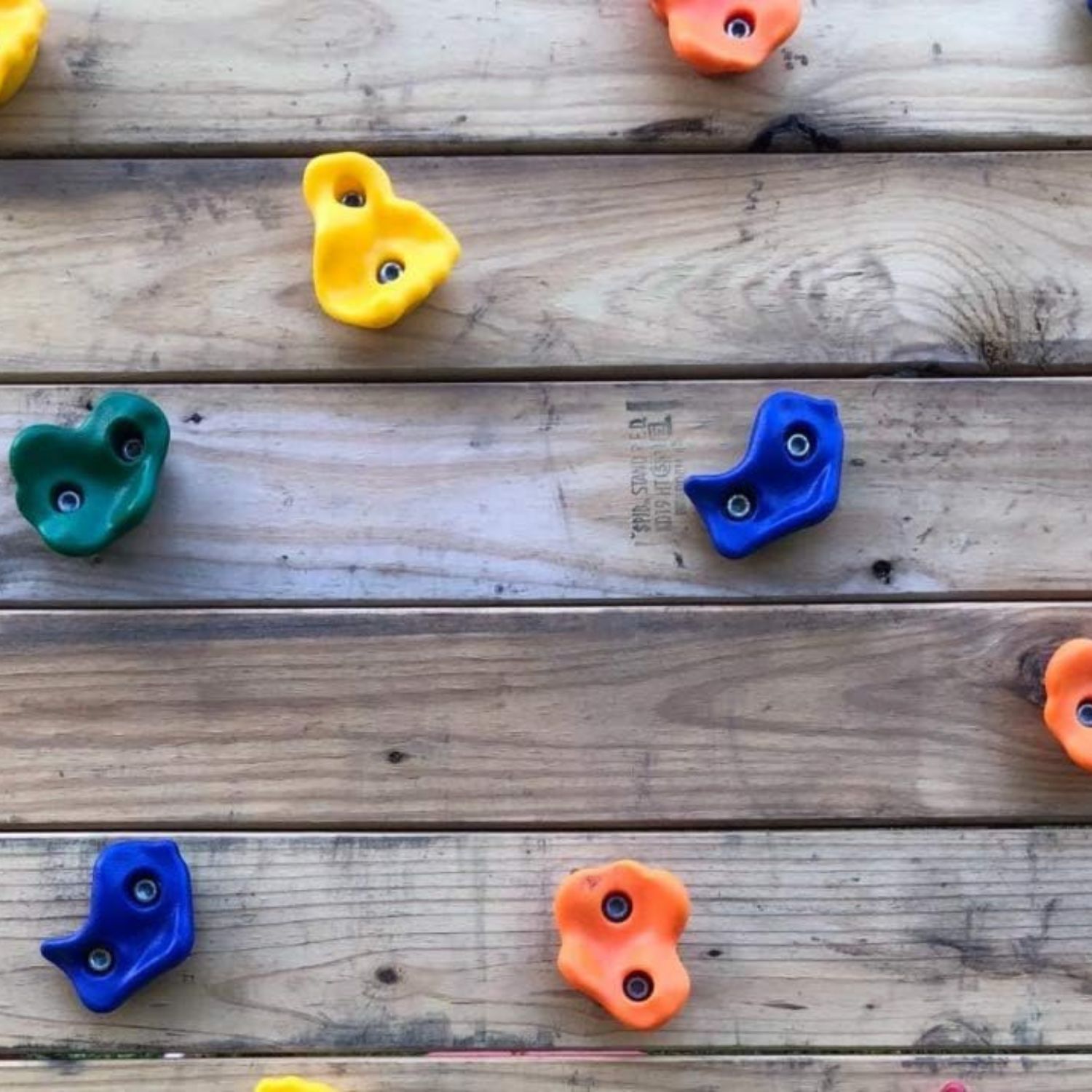
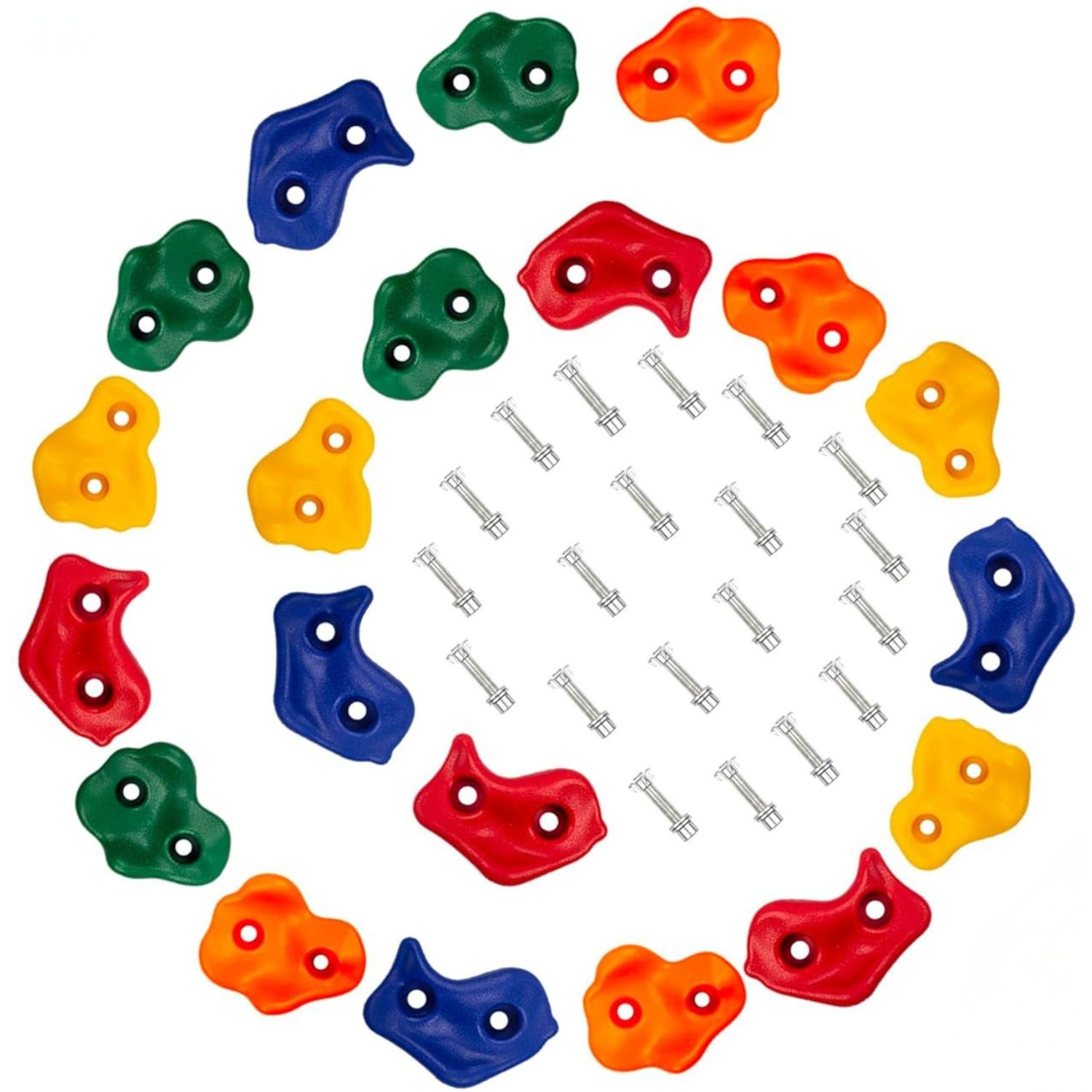
The best holds for young children are generously sized with a positive, incut grip , meaning there's a clear ledge for fingers and toes to hook onto rather than a subtle feature that demands advanced technique. Pig-nose style holds, jug holds, and large pinch holds are all excellent starting points for children aged two and up. As children develop, you can introduce smaller or more technical holds to increase the challenge.
Texture matters enormously. A good hold should feel grippy without being abrasive enough to tear up small hands over extended use. Look for holds made from high-quality polyurethane resin with a fine-to-medium grit texture , secure without being harsh.
Size and Scaling
A rock climbing gym equipment principle that translates perfectly to home setups: size your holds to your climber. Toddlers and young children need larger, more generous holds that don't demand precise footwork or finger strength. As children grow into the six-to-ten age range, medium holds become appropriate, and teenagers can comfortably work with the same sizes used in adult bouldering gyms.
Many parents buy a wall climbing set at the larger end initially and supplement with smaller holds over time as their child's ability progresses. This is a smart approach , the larger holds never become redundant because they remain useful for warm-ups and younger siblings.
Colour and Variety
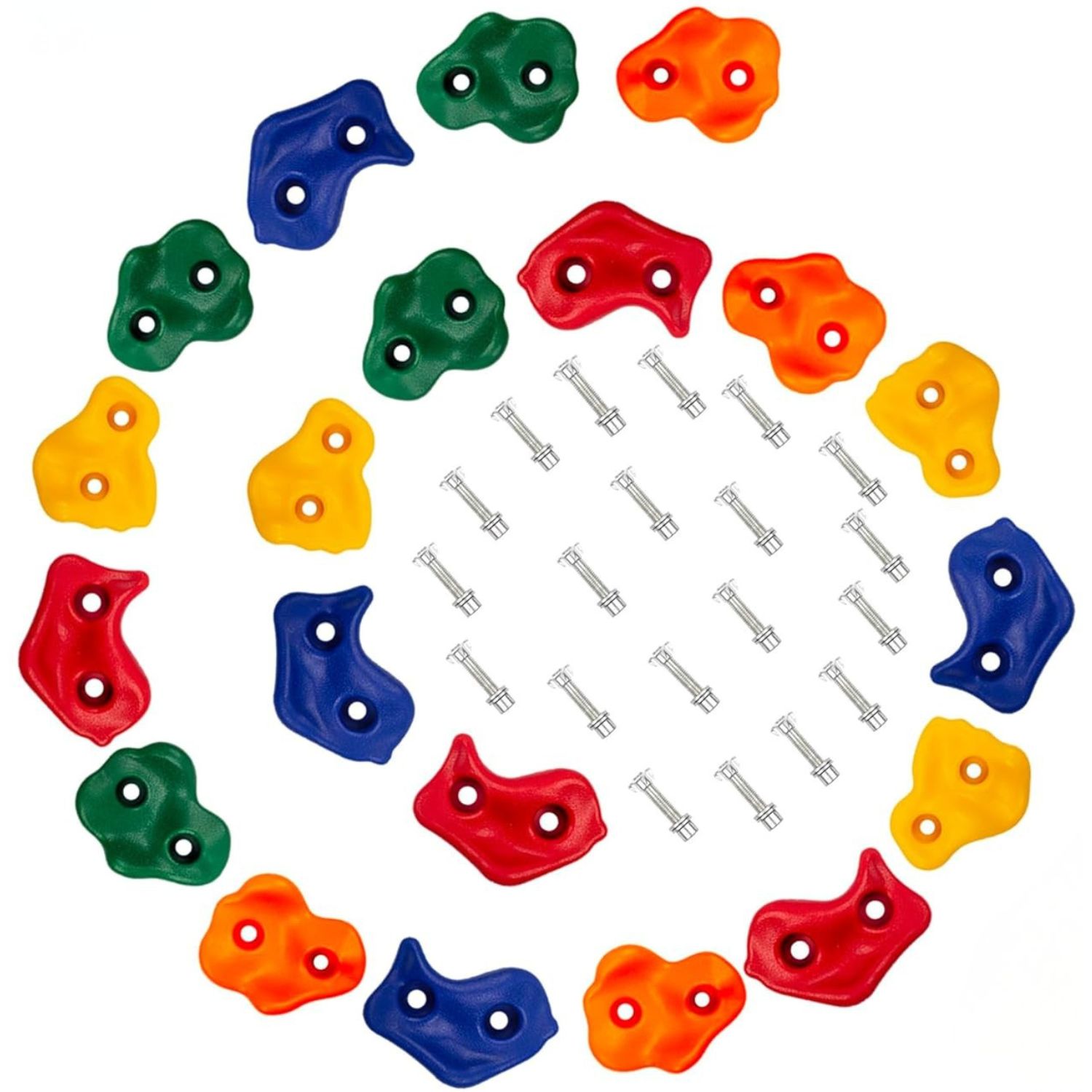
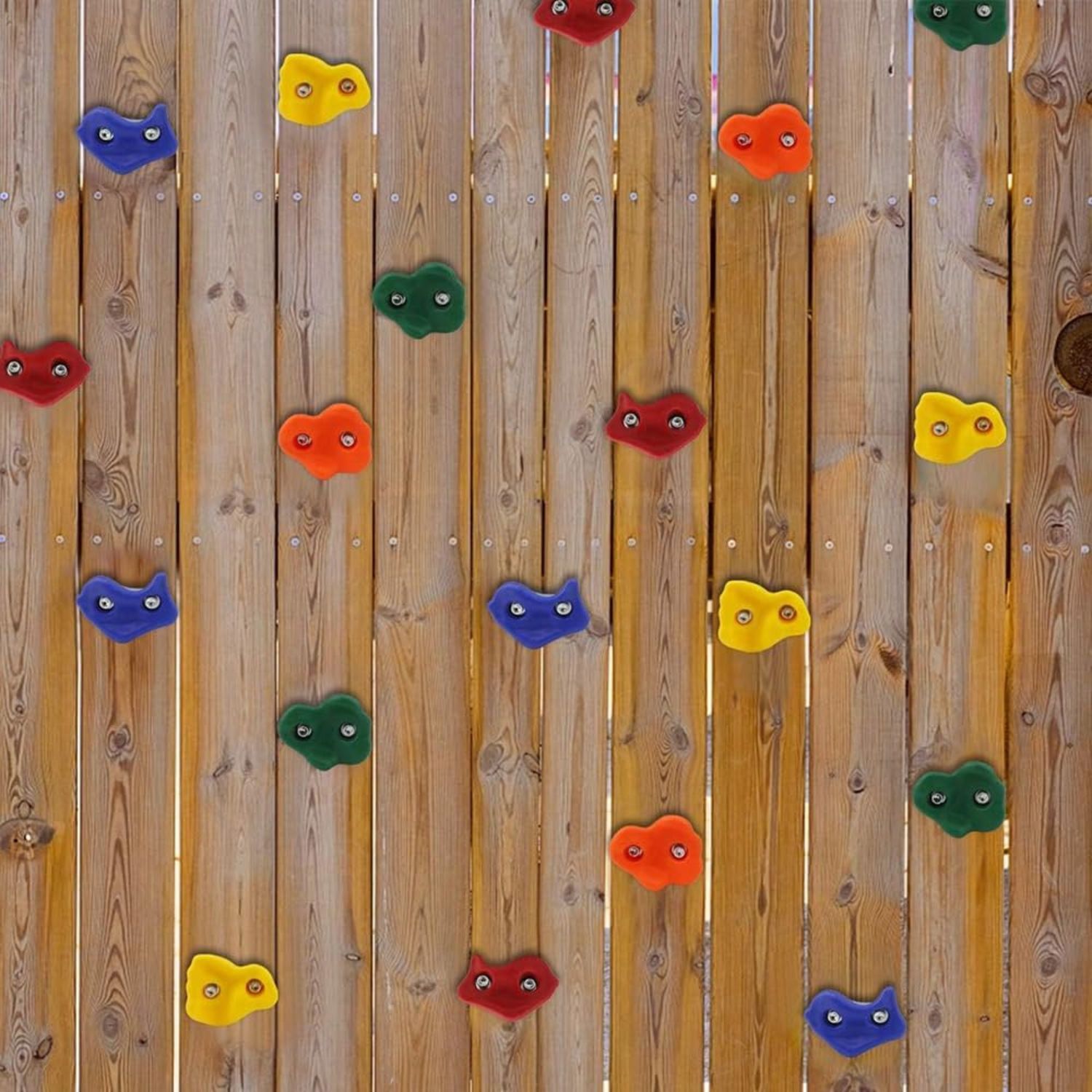
Children are motivated by visual appeal. Bright, varied colours make a climbing wall immediately more inviting and can also be used practically , colour-coding routes by difficulty so that a red route is easier than a blue one, for example, mirrors exactly how commercial climbing gyms set problems. A good indoor climbing wall kit or outdoor rock climbing wall kit should include a range of colours across the hold set for this reason.
Hardware and Installation Inclusions
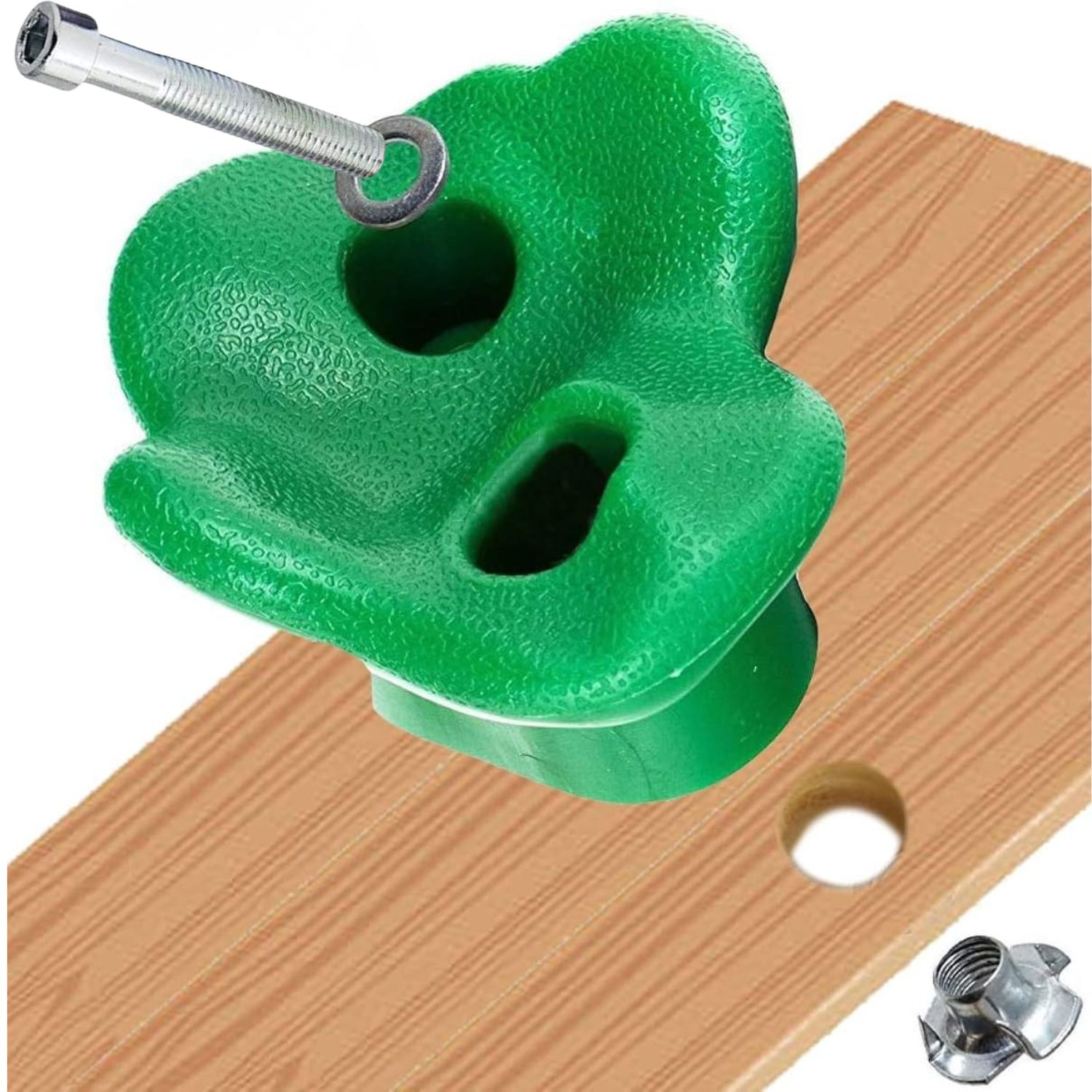
This is where many cheaper sets fall short. A quality home climbing wall kit should include not just the holds themselves but all the hardware needed for installation: bolts, T-nuts, an Allen wrench, and ideally the correct drill bit for making the T-nut holes. Having the drill bit included is a genuinely thoughtful touch that saves an extra hardware store trip and ensures the holes are exactly the right diameter for a secure fit.
Choosing the Right Board and Wall Surface
Your climbing holds are only as good as the surface they're mounted to. For most home rock climbing wall kit installations, ¾-inch plywood is the gold standard. It's thick enough to hold T-nuts securely, stiff enough not to flex under a child's weight, and widely available at any timber merchant or DIY store.
For children's walls specifically , particularly for boards up to 1.5 inches thick , a 5-ply or 7-ply softwood plywood is often recommended over hardwood alternatives. Softwood ply is easier to drill cleanly, less likely to split around T-nut holes, and typically more affordable. It's also lighter, which matters if you're building a freestanding or angled structure.
If you're building a wall climbing kit for a Pikler-style setup, these holds integrate beautifully with arches, ramps, and ladder panels, effectively converting existing play equipment into a more challenging climbing environment. For outdoor installations, always use exterior-grade plywood with a weather-resistant coating. Unsealed plywood will warp and degrade quickly when exposed to rain, compromising the integrity of your rock wall kit.
Installation: A Step-by-Step Overview
One of the most appealing aspects of a good climbing wall kit is how straightforward the installation process is when the right tools are included. Here's a general overview:
Step 1 , Prepare your board. Cut your plywood to the desired size and sand the surface lightly to remove any splinters. If going outdoors, apply your weatherproof treatment at this stage and allow it to dry fully.
Step 2 , Plan your hold layout. Position your climbing holds across the board in the arrangement you want, then use a pen or pencil to trace the bolt holes. Vary hold positions to encourage different movement patterns.
Step 3 , Drill your T-nut holes. Using the included drill bit, drill cleanly through the board at each marked point. Work from the face of the board to avoid tear-out on the climbing surface.
Step 4 , Install the T-nuts. From the back of the board, tap a T-nut into each hole. These should sit flush with or slightly recessed into the back face of the plywood.
Step 5 , Mount the board. Fix the plywood securely to your wall frame, playset structure, or freestanding frame. Ensure all fixings are appropriate for the load.
Step 6 , Attach the holds. Using the Allen wrench included in your rock climbing wall kit, bolt each hold through the face of the board into its T-nut. Tighten firmly , holds should have zero movement when gripped.
Step 7 , Safety check. Before your child takes their first move, test every single hold by hand. Pull, twist, and press each one firmly. Add safety matting beneath the wall appropriate to the height of the structure.
Safety Considerations for Home Climbing Walls
No buying guide for equipment for wall climbing would be complete without an honest look at safety. Home climbing walls are genuinely safe when built and maintained correctly , but they do require thoughtful setup.
Matting is non-negotiable. Even a low wall of one metre can produce a fall that results in injury without adequate impact protection beneath it. Foam crash mats, interlocking EVA foam tiles, or purpose-made bouldering pads all work well depending on the height involved.
Height management for young children. For toddlers and early climbers, keeping the wall low , one to one and a half metres of climbable height , reduces both the risk and the fear factor. You can always extend the wall as confidence grows.
Regular hardware checks. Holds loosen over time, especially with frequent use. Build a habit of checking every hold monthly, tightening anything that has shifted, and replacing any hardware that shows signs of wear or corrosion , particularly on outdoor rock wall kit installations.
Supervision for young children. Children under four should always be supervised on a climbing wall. Beyond that, gauge your own child's ability and confidence honestly , independence on the wall is earned gradually.
Getting the Most Out of Your Climbing Wall Long-Term
A great indoor rock climbing wall kit or outdoor setup isn't a one-time purchase , it's a platform that grows with your child. Rotate hold positions every few weeks to create new routes and keep the challenge fresh. Add holds gradually as your child progresses. Introduce simple games , colour-only routes, timed ascents, or blindfolded footwork challenges , to keep engagement high.
Many families find that a home climbing wall becomes the centrepiece of active play for years, outlasting trends in toys and screen-based entertainment by a considerable margin. The investment in a quality home rock climbing wall kit pays dividends not just in physical development, but in the confidence, persistence, and love of movement that children carry with them long after they've outgrown the wall itself.
Final Thoughts
Building a home climbing wall doesn't require professional skills, a large budget, or a vast amount of space. With a quality set of climbing hold sets, the right plywood, and the hardware to bring it all together, you can create something genuinely special , a place where your child can challenge themselves, build real physical capability, and have the kind of unstructured, adventurous fun that childhood is made of.
Take your time choosing a wall climbing kit that includes everything you need out of the box, prioritise holds that are sized and textured appropriately for your child's age, and build something sturdy enough to last. The moment they make their first successful ascent will make every minute of the build entirely worthwhile.